
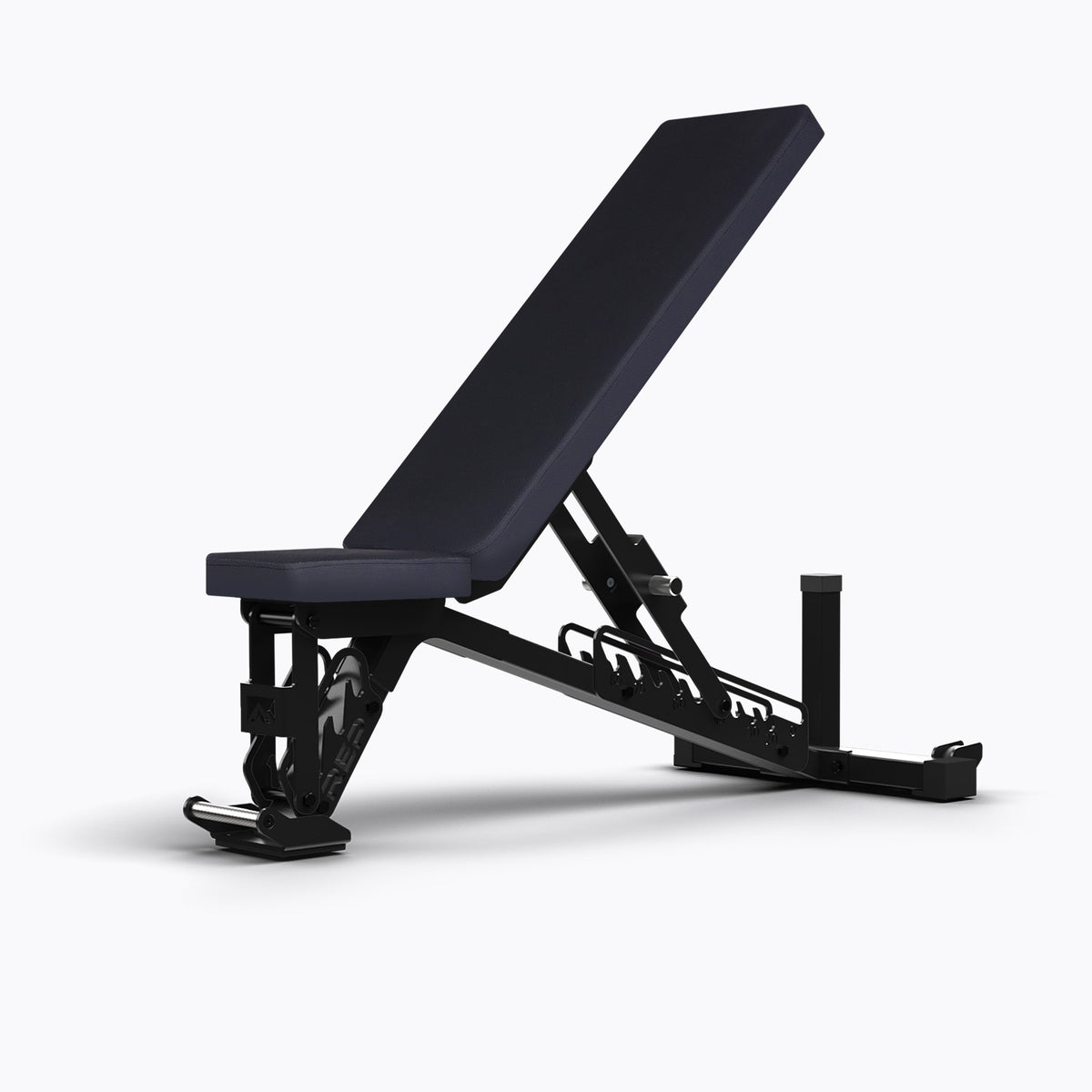
Your needs, this model
Does it fit your priorities?
Which post selection is required for the AB-5200 2.0 to have decline angles?
REP says the fixed post supplies ten flat/incline back settings, while the adjustable post adds -8°, -6° and -4° settings. Select the Adjustable post if those decline positions are essential; this does not add an included leg restraint, and REP says the bench is not compatible with its Adjustable Bench Leg Roller Attachment.
Explore this need in the finder →Can the fixed-post AB-5200 2.0 meet a requirement for decline?
No. The fixed-post configuration is documented as flat/incline only. If decline is non-negotiable, choose the Adjustable post and verify that exact option in the order summary; the product's color-only base feed does not assign a combined SKU to the post/pad grid.
Explore this need in the finder →What changes when choosing the AB-5200 2.0 Wide pad?
REP lists the Wide back pad at 14 inches versus 12 inches for Standard; it also lists the seat at 14 inches tapering to 11 inches versus Standard at 12 inches tapering to 8.9 inches. REP says Wide does not meet its cited IPF width requirement, while Standard does. Fit depends on the lifter, so confirm the option on the exact package rather than relying on the thumbnail.
Explore this need in the finder →Does the 1,000-lb rating mean this bench was independently tested for my total load?
REP publishes a 1,000-lb capacity, but the public sources reviewed here do not establish an independent test or explain every user's bodyweight-plus-external-load interpretation. Treat it as the manufacturer's figure and ask REP how it applies to your planned use.
Explore this need in the finder →The REP AB-5200 2.0 is best understood as a configurable bench, not one fixed feature set. The maker describes two choices that change function: a fixed or adjustable support post, and a Standard or Wide pad. This assessment covers the current U.S. AB-5200 2.0 listing and its four supported post/pad combinations. It is based on REP's current product, option and comparison pages; no physical bench was assembled, owned, measured or tested for this review.
Choose the post for the angle range you actually need
With the fixed post, REP lists ten back-pad settings: 0°, 20°, 30°, 37.5°, 45°, 52.5°, 60°, 67.5°, 75° and 85°. That is a flat-to-incline bench, not an FID bench. The adjustable post keeps those ten positions and adds three negative back angles—-8°, -6° and -4°—for a flat/incline/decline arrangement. REP's selector calls the two posts Fixed and Adjustable; its separate post-option record assigns them different part SKUs, AB-5202-3 and AB-5202-4. The main bench feed itself lists only color variants under a generic `ab-5200` SKU, so I do not infer a unique combined bench SKU from the separate option parts.
The fixed post suits a routine that does not need decline; REP presents it as the simpler choice for busy or less-experienced settings. Only Adjustable adds negative angles. REP says its pop-pin must be fully engaged, so check the exact instructions before adjusting. That is a pre-use check, not a stability test.
REP's separate option records also provide these post-only reference images. They help distinguish the fixed post from the telescoping adjustable part, but neither picture is an assembled bench view or proof of the package a particular seller supplies.


Standard and Wide change the contact surface
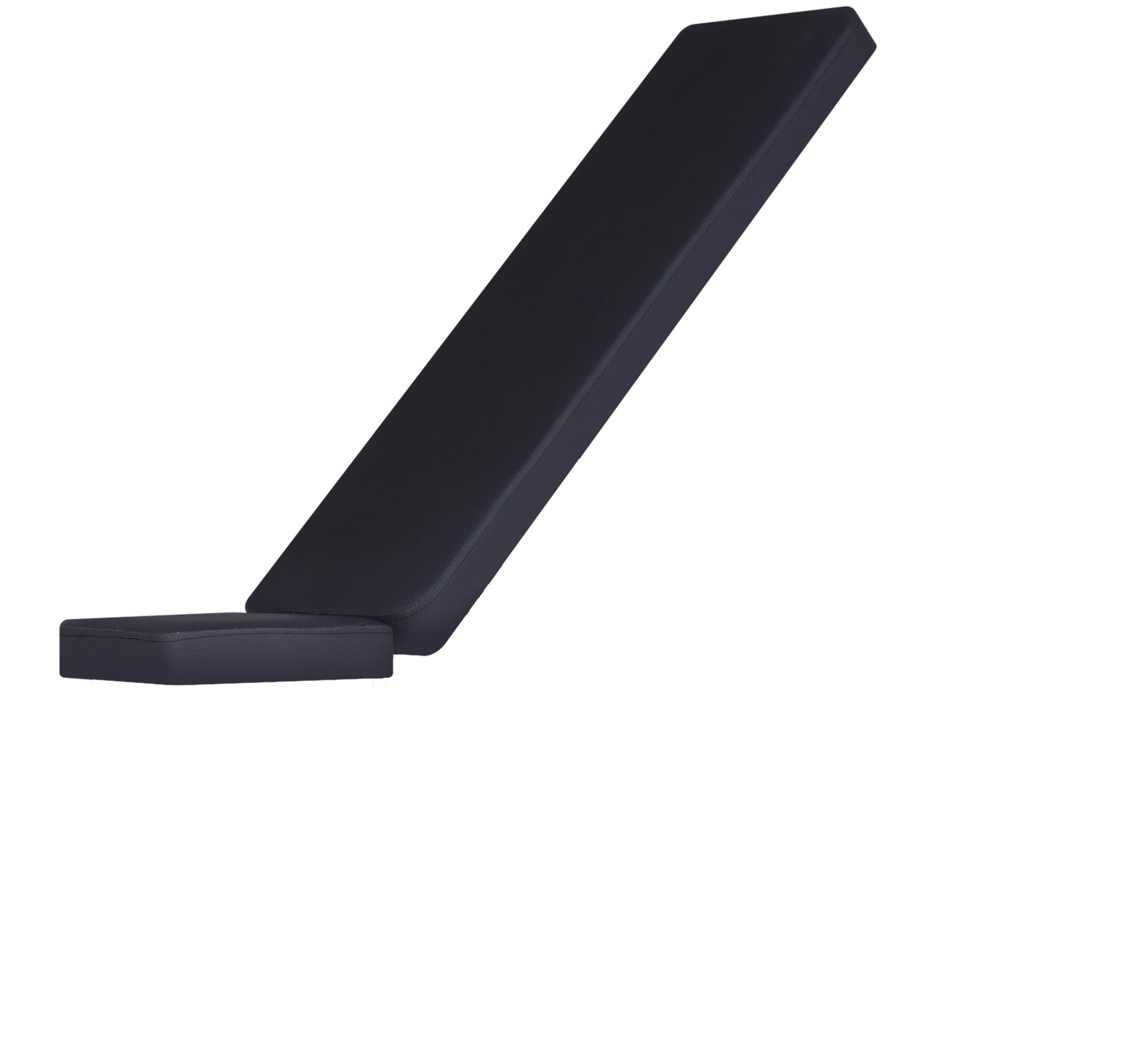
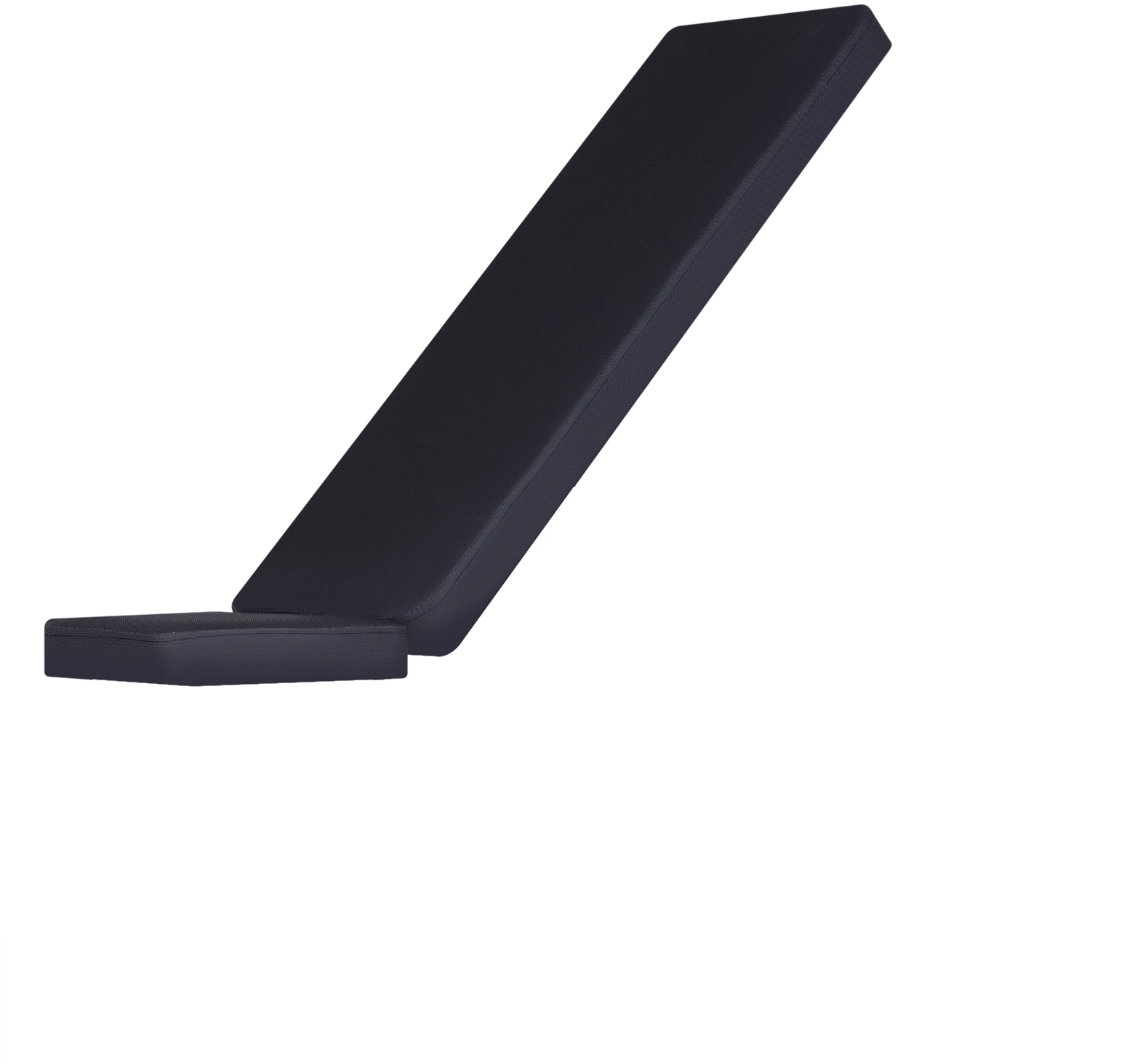
The other functional choice is pad width. REP's dimensions list a 12-inch Standard back pad and a 14-inch Wide back pad. The Standard seat is listed as 12 inches across, tapering to 8.9 inches; the Wide seat is listed as 14 inches, tapering to 11 inches. REP says both options meet its cited bench height and length dimensions, but the Wide choice does not meet the cited IPF width requirement. Its FAQ says broader pads may help lifters who want more shoulder support or a floor-press-like surface, while some smaller lifters may find the width limits their range of motion. Those are manufacturer descriptions; individual fit depends on the lifter and movement.
The manufacturer's color-only feed does not enumerate the pad and post choices as a full grid of combined bench SKUs. REP exposes the separate pad options as AB-5200-STANDARD and AB-5200-WIDE, and the posts as AB-5202-3 and AB-5202-4. The product page says the frame and guide-rail accent can also be chosen separately. Check the order summary for both the post and pad selections; a photograph, frame color or general model name alone does not establish them.
The pad-option page shows Standard and Wide as separate pad components. The photos are useful for seeing the different pad shapes; they are not scale drawings, so use REP's stated dimensions and the exact order configuration rather than estimating widths from pixels.
Published size and rating
REP lists the assembled 2.0 at 115 lb, 57.6 inches long, 25.8 inches wide and 17.5 inches high with the pad. Its dimensional material gives a 10.33-square-foot use footprint, and the product page says its metal, plastic-lined stand supports vertical storage using 3.1 square feet. These are manufacturer figures, not measurements made for this review. The stored footprint does not include room to lift, tip, turn, clear a ceiling or move the bench through a doorway; measure the actual route and keep the maker's current storage instructions in view.
The frame is listed as 11-gauge steel and the pad covering is REP CleanGrip. REP states a 1,000-lb capacity. The public material consulted here does not establish a test protocol or fully define how that rating should be interpreted against a particular user's bodyweight and external load, so treat it as a maker-stated figure rather than a tested result or universal fit guarantee. If your loading needs depend on the definition, ask REP before buying.
What the AB-5200 2.0 does not include
REP says this model is not compatible with its Spotter Platform or Adjustable Bench Leg Roller Attachment. The FAQ explains that its decline range is not aggressive enough to require the leg roller to hold the user in position. That does not mean every exercise or lifter will find a leg restraint unnecessary; it means the accessory should not be assumed compatible or included with this bench. The current product material reviewed here does not list transport wheels. A front handle is described for moving the bench, but a handle is not proof of wheels.
Do not confuse it with the original AB-5200
REP's comparison of the original AB-5200 and the 2.0 identifies real edition differences. It describes the older version as a fixed-post, flat/incline bench with seven back settings, three seat settings and a 125-lb weight; the 2.0 is listed at 115 lb, with ten common flat/incline back settings and four seat positions, while the adjustable-post option adds decline. REP also describes the 2.0's vertical stand as improved with a protective plastic liner. These points help distinguish the generations, but the older bench remains a separate model in our research and is not covered by this 2.0 assessment. Confirm the suffix on used or third-party listings.
Who should compare it—and what to verify
Compare the AB-5200 2.0 if you need a substantial adjustable bench with upright storage and want to choose between flat/incline-only and three mild decline angles. The pad is a separate fit decision, and Wide misses the width condition REP cites for IPF. At 115 lb and 10.33 square feet on the floor, it also needs deliberate room and handling planning.
Before ordering, verify the exact AB-5200 2.0 package, Standard or Wide pad and Fixed or Adjustable post; the base feed does not provide a combined SKU grid. Measure use and storage clearances, check the current instructions and ask REP how its 1,000-lb figure applies to your use. The Metallic Black thumbnail shown here does not prove which post/pad combination a seller supplies.
Primary sources: REP AB-5200 2.0 product page and FAQ, REP's post options and pad options, the REP bench guide and dimensions, and REP's AB-5200 generation comparison.
Key specifications
Key details at a glance
| Adjustment range | Configurable flat incline or fid |
|---|---|
| Manufacturer-stated capacity | 1000 lb |
| Bench weight | 115 lb |
| Length | 57.6 in |
| Width | 25.8 in |
| Height when flat | 17.5 in |
| Base footprint area (listed or calculated) | 10.33 sq ft |
| Back-pad positions | 0 / 20 / 30 / 37.5 / 45 / 52.5 / 60 / 67.5 / 75 / 85° |
| Seat-pad positions | 0 / 8 / 20 / 30° |
| Pad gap | 1.4 in |
| Leg restraint included | No |
| Leg-roller positions | 0 |
| Vertical storage supported | Yes |
Use the exact model’s instructions for operating limits, supplied equipment and version differences.
Sources for this review
Sources for this assessment
- AB-5200 2.0 Adjustable Weight Bench — REP Fitness
- REP AB-5200 2.0 current product and finish data
- AB-5200 2.0 Post options — REP Fitness
- AB-5200 2.0 Pad options — REP Fitness
- REP Bench Guide — REP Fitness
- AB-5200 2.0 Comparison with Other Benches — REP Fitness
- Recalls & Product Safety Warnings — U.S. CPSC
Compare the constraints that matter to you
Use the finder to compare currently researched benches, and opt in to the five separately assessed earlier REP configurations or families only when checking an existing or used offer. Match the exact model, edition and manual; the catalogue is still being expanded.