
Your needs, this model
Does it fit your priorities?
Which positions does the exact Flat Utility Bench support?
The current U.S. offer is a fixed-flat bench. Its product page and matching manual do not document incline or decline positions, and its bench-plus-hardware package lists no leg restraint.
Explore this need in the finder →Does its 661-lb maker-stated maximum clear a 650-lb finder minimum?
Numerically, yes: the product page states a 661-lb maximum, so the documented value clears 650 lb but not the next 25-lb step at 675. The maker does not say whether user weight is included or provide an independent test; do not treat this filter result as a personal safety limit.
Explore this need in the finder →Can I use the shipping box size as the bench footprint or assume upright storage?
No. Bells lists a 50-by-12-by-5-inch shipping carton and 42-lb package, not assembled bench dimensions; the stated bench mass is 37.2 lb. The manual calls for a flat surface and at least two feet of clearance, while no approved wall hanger, floor-upright storage method, or stored envelope is identified in the sources checked.
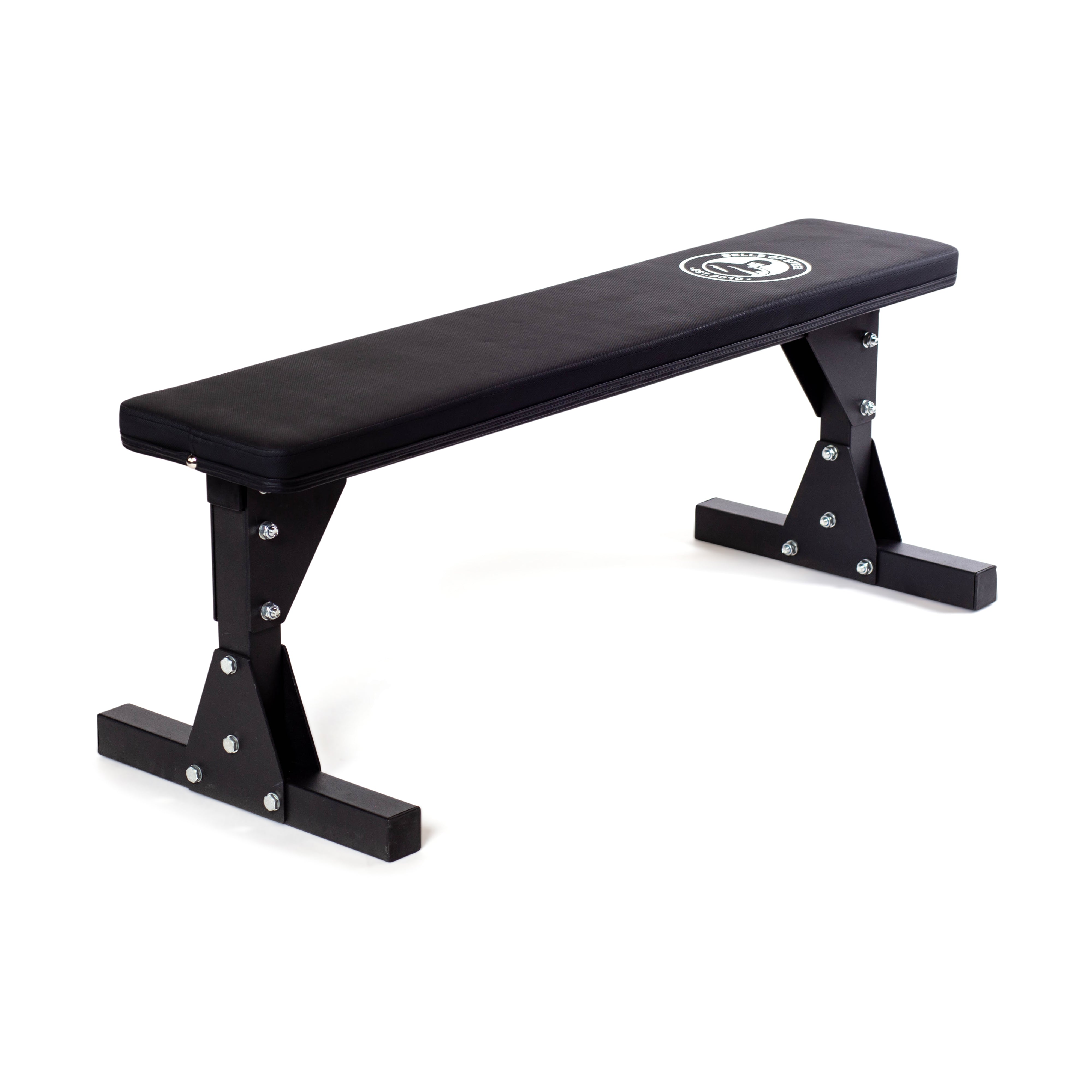
Explore this need in the finder →The Bells of Steel Flat Utility Bench is a straightforward fixed-flat bench, not an adjustable FID design. The current U.S. offer is the Default Title variant, SKU UTIL-FLT-BEN (variant 43316265910469), and its linked assembly manual names the same SKU. That direct identity matters: other Bells benches and package add-ons in the same catalogue do not transfer their angles, rollers, wheels or storage instructions to this model.
A fixed-flat job, with a modest specification sheet
Bells describes a four-legged bench with a two-inch pad. Its stated bench mass is 37.2 pounds, which is the clearest practical distinction from heavier, more heavily equipped flat platforms. The listing presents the bench and hardware kit as the package. It does not document a moving backrest, decline setting or included leg restraint, so the useful operating plan is the ordinary flat one. Buyers seeking a foot catch or leg support should treat those as separate requirements rather than assuming a padded bench includes them.
The thinner pad and basic fixed frame may make this a simpler alternative to a model with a thick, wider pad, accessory mounts or a moving adjustment ladder. They are not proof of comfort, stability or a user's preferred pressing position. Bells does not publish the pad's length or width in the sources checked, and no fit claim can substitute for comparing the actual contact surface with your body and exercises. If a specific pad width, height or gap is important, ask the maker for a drawing of SKU UTIL-FLT-BEN before deciding.
Read 661 pounds as a maker claim, not a safety test
The product page states a 661-pound maximum. That lets the bench clear a 650-pound minimum in our finder and fail a 675-pound minimum; the filter is comparing a published number with a shopping threshold. The source does not define whether the rating combines user bodyweight with external weight, describe a test method, or state a personal safe working limit. It is not a load test conducted for this assessment. If your training depends on a particular capacity convention, request the manufacturer's written explanation for the exact model and apply your own safety margin.
This published number is a useful difference from fixed-flat alternatives whose maker pages provide no numeric capacity, but it is not a reason to ignore an exact use case. It is also lower than the 1,000-pound figures Bells publishes for the Powerlifting Flat Bench and Hero Bench. Those products have different frames, masses and supplied features; their ratings do not transfer to the lighter Flat Utility Bench. In particular, a search result for the brand or a neighbouring product family is not evidence for the SKU in front of you.
Do not mistake shipping details for room-fit measurements
Bells lists a 50-by-12-by-5-inch shipping box and a 42-pound package. Those are transport figures, not assembled length, width, height or floor area; the bench's separately stated mass is 37.2 pounds. Without assembled base dimensions, a numeric footprint filter cannot certify that this bench fits a narrow room. The manual advises placing the equipment on a flat surface and leaving at least two feet of free space around it. That is a setup warning, not a measured clearance plan for this bench or a claim that every exercise needs only that much space.
Storage needs the same caution. Product copy calls the bench lightweight and includes an unusual reference to hanging it from walls, but the sources checked do not show an approved hanger, attachment hardware, installation method, floor-upright position or storage envelope. The matching manual is an assembly and safety document, not a wall-mounting guide. This assessment therefore does not count the bench as confirmed vertical-storage equipment. The exact photos and assembly drawing show fixed feet rather than transport wheels, so there is no documented rolling route either. Plan to carry it only if its stated mass is suitable for the person moving it, and ask Bells how it should be stored before choosing a wall or upright arrangement.
Assembly, checks and comparison points
The six-page manual is SKU-specific and illustrates the frame bolts and pad fasteners. Follow it for assembly, use the specified tools, check that the nuts and bolts are tight before training and periodically retighten them. Bells' manual also says to keep at least two feet clear around the product and to use it on a flat surface. This is source-based setup guidance, not an account of assembling or testing the bench here. Check the delivered box and hardware against the current instructions; the documented package contains the bench and hardware kit, not a separately pictured accessory.
The Rogue Flat Utility Bench 2.0 is one useful contrast: its source publishes a 47-by-14-inch base from which a 4.57-square-foot rectangle can be derived, but it provides no numeric load rating in the page reviewed. Bells publishes the 661-pound maximum but leaves assembled footprint unknown. Neither result is a complete room or use-case decision: one buyer may prioritize a rated figure, another may need a known footprint, and unknown values should not be filled in by comparing photographs.
This Flat Utility Bench is worth comparing when a buyer wants a single-position flat platform, values its relatively low stated bench mass and can work within the source's limited specifications. Pause if incline or decline, a supplied leg restraint, wheels, a documented vertical-storage method, pad measurements or a known floor area are hard requirements. Before ordering, confirm the exact UTIL-FLT-BEN SKU, assembled dimensions, capacity convention, and any storage instructions with Bells of Steel. No bench was purchased, owned, assembled, measured or load-tested for this assessment.
Key specifications
Key details at a glance
| Adjustment range | Flat only |
|---|---|
| Manufacturer-stated capacity | 661 lb |
| Bench weight | 37.2 lb |
| Leg restraint included | No |
| Transport wheels shown | No |
Use the exact model’s instructions for operating limits, supplied equipment and version differences.
Sources for this review
Sources for this assessment

Compare the constraints that matter to you
Use the finder to compare currently researched benches, and opt in to the five separately assessed earlier REP configurations or families only when checking an existing or used offer. Match the exact model, edition and manual; the catalogue is still being expanded.